
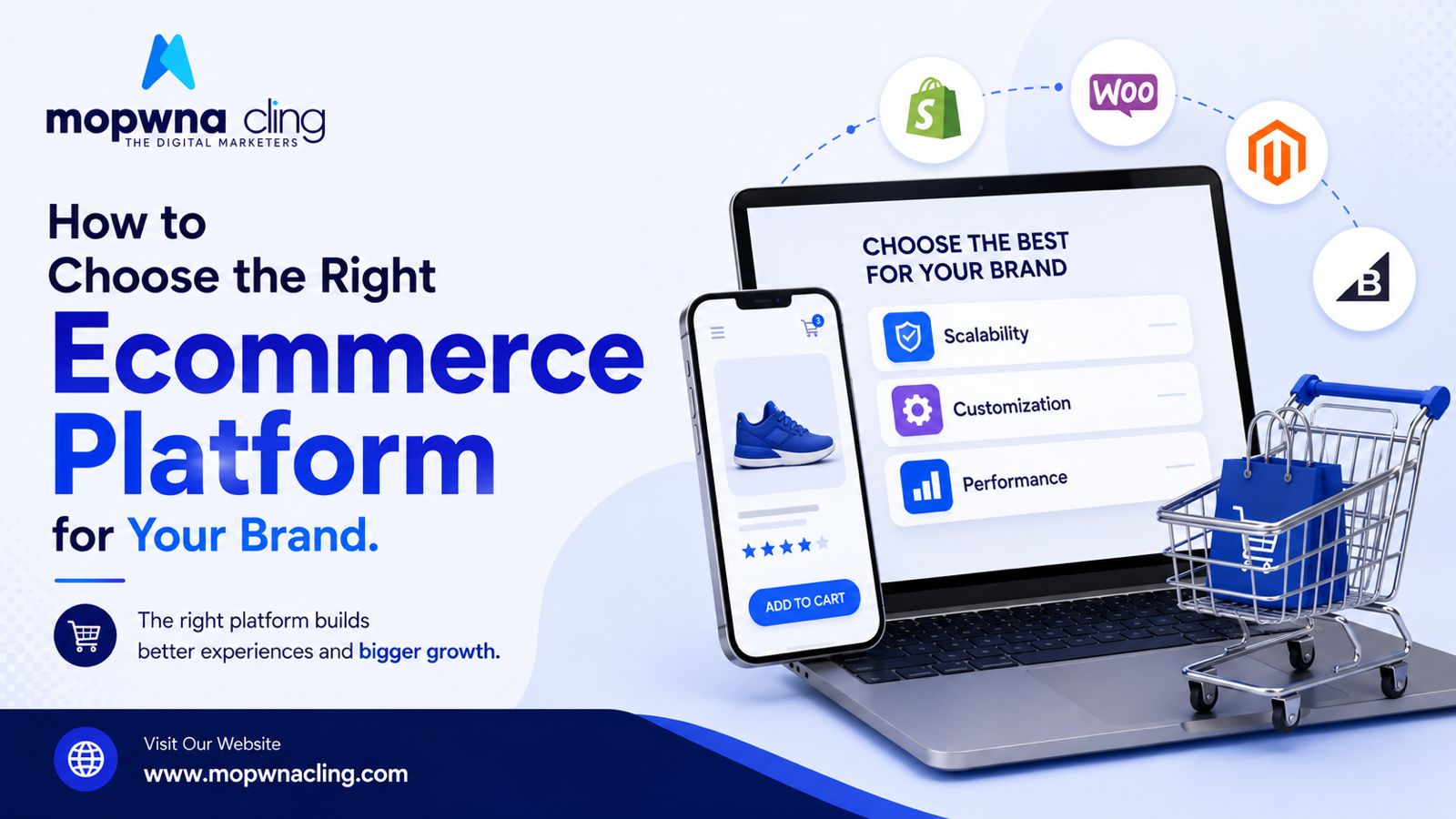
How to Choose the Right Ecommerce Platform for Your Brand
We at Mopwna Cling help you increase your online presence 10x
Picking an ecommerce platform feels like a bigger decision than it actually needs to be, and that's exactly why so many brands get stuck overthinking it. The truth is, most platforms can do the basics well. The differences show up later — when you're scaling, customizing, or trying to fix something that's suddenly become a bottleneck.
Start with where you actually are, not where you hope to be
A brand doing ₹2 lakh a month doesn't need the same platform as one doing ₹2 crore a month. It's tempting to pick the "enterprise-grade" option early because it sounds like ambition. In practice, it usually means paying for complexity you don't need yet and slowing yourself down.
Shopify vs. WooCommerce vs. custom-built — the real trade-offs
Shopify is the default recommendation for a reason: it's fast to launch, the app ecosystem covers almost every need, and support is solid. The trade-off is cost as you scale and less flexibility if you want something truly custom.
WooCommerce, built on WordPress, gives you more control and lower ongoing costs, but you're responsible for more of the technical upkeep — hosting, security, updates. It suits brands with some technical comfort or a developer on call.
Fully custom platforms make sense only once you have specific requirements no off-the-shelf tool handles well — usually at a scale where you have the budget and team to support it. Most brands never actually reach the point where custom-built is the right call, despite how often it gets pitched as the "serious" option.
Payment gateway compatibility isn't a footnote
Check which payment gateways integrate natively before you commit. In India, UPI support, EMI options, and COD reconciliation tools vary quite a bit between platforms, and retrofitting this later is more painful than it should be.
Think about the app/plugin ecosystem
Whatever platform you pick, you'll eventually need third-party tools — for reviews, subscriptions, loyalty programs, or shipping. A platform with a thin ecosystem will force you into workarounds or custom development sooner than you'd like.
Mobile experience is non-negotiable
Test the actual checkout flow on a mid-range Android phone, not just a laptop. A huge share of Indian ecommerce traffic is mobile-first, and platforms differ more than people expect in how smoothly they handle mobile checkout out of the box.
Migration costs are real — factor them in
Switching platforms later isn't free. You'll lose SEO equity if URLs aren't handled carefully, historical customer data can get messy, and there's always a dip in conversion during the transition. This doesn't mean pick the "safest" option forever — it means don't treat platform choice as reversible without cost.
A simple way to decide
List your must-haves: budget, expected order volume in 12 months, payment methods, and whether you need custom functionality soon. Then test-drive two or three platforms' free trials with your actual product catalog, not a demo store. You'll learn more in an afternoon of hands-on testing than in a week of reading comparison articles.
The "right" platform is rarely the most powerful one. It's the one that fits your current stage and doesn't box you in for the next one.
Let's Build Your Brand Together Looking to grow your ecommerce business with smart digital marketing strategies? Mopwna Cling helps brands achieve measurable growth through Performance Marketing, SEO, Website Development, Branding, Social Media Marketing, and Ecommerce Solutions.
Let's Build Your Brand Together 📞 +91 7906544070 🌐 www.mopwnacling.com ✉️ info@mopwnacling.com