
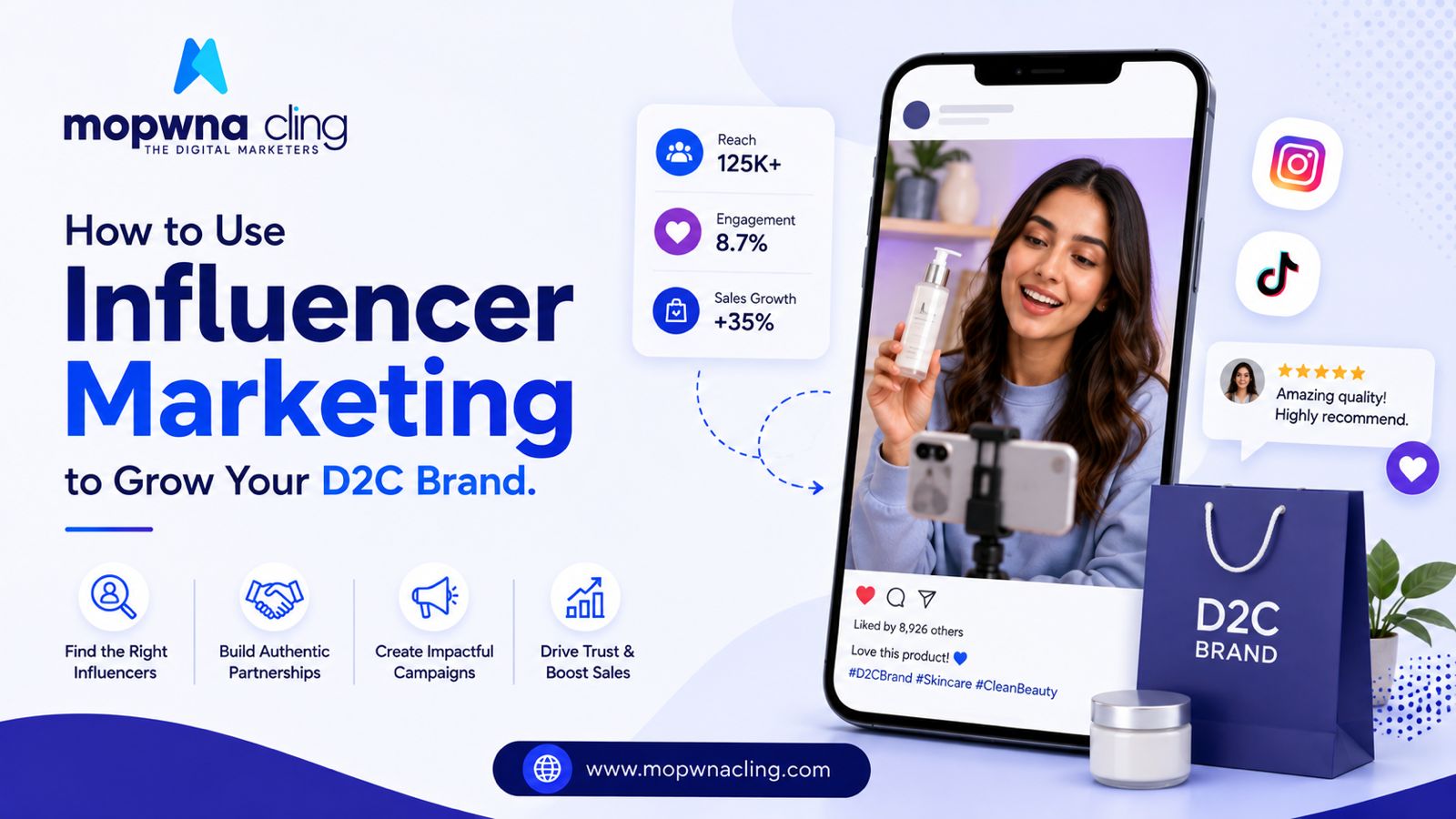
How to Use Influencer Marketing to Grow Your D2C Brand
We at Mopwna Cling help you increase your online presence 10x
Influencer marketing has a reputation problem — a lot of brands have burned budget on a big follower count that produced zero sales. That doesn't mean the channel doesn't work. It means most brands are approaching it backwards, chasing reach instead of relevance.
Micro-influencers usually outperform big names
An influencer with 15,000 genuinely engaged followers in your exact niche will often drive more sales than one with 500,000 followers who post about everything. Engagement rate and audience relevance matter more than raw numbers, especially for a D2C brand with a specific product-market fit. It's also far cheaper to test with several micro-influencers than to bet the whole budget on one big name.
Product-market fit with the influencer matters more than aesthetics
A beautifully shot post from someone whose audience doesn't match your customer won't convert, no matter how good it looks. Before reaching out, actually check who follows them — are they the right age group, location, income bracket, interest area? A smaller but sharply matched audience beats a large mismatched one every time.
Gifting vs. paid partnerships — know when to use which
Early on, gifting products in exchange for honest content is a reasonable way to test who's a good fit without big spend. Once you find influencers whose content genuinely drives sales, move to paid, ongoing partnerships. Treating every collaboration as a one-off gift exchange means you're constantly starting from zero instead of building relationships that compound.
Give creative freedom, not a script
Influencers know their audience better than your brand brief does. Overly scripted content is easy to spot and tends to underperform organic-feeling posts. Share your key message and let them translate it into their own voice — that authenticity is the entire reason the channel works in the first place.
Track with unique codes or links, not vibes
"It felt like it went well" isn't a metric. Give each influencer a unique discount code or trackable link so you can see actual attributed sales, not just likes and comments. This also lets you identify which creators are worth repeat partnerships versus which ones generated buzz but no revenue.
Don't ignore the long-tail of UGC
Beyond the initial post, influencer content becomes an asset — repurpose it in ads, on product pages, in email campaigns. This extends the value of the partnership well past the original posting window, and often the repurposed content performs better than brand-produced alternatives.
Set realistic expectations
Influencer marketing rarely produces an immediate spike unless paired with a specific offer or launch moment. Its real strength is building familiarity and trust over repeated exposure — someone seeing your product mentioned by three different creators they follow is far more likely to buy than someone seeing it once.
For D2C brands without the budget of a big legacy retailer, influencer marketing is one of the few channels where a smart, well-targeted strategy can genuinely outcompete a bigger competitor's blunt-force spend.
Let's Build Your Brand Together 📞 +91 7906544070 🌐 www.mopwnacling.com ✉️ info@mopwnacling.com