The Attribution Blind Spot: When Customers Share Your Content Privately
We at Mopwna Cling help you increase your online presence 10x
A customer see your Reel likes it save it and eventually buy your product. Sound simple right?
Not always.
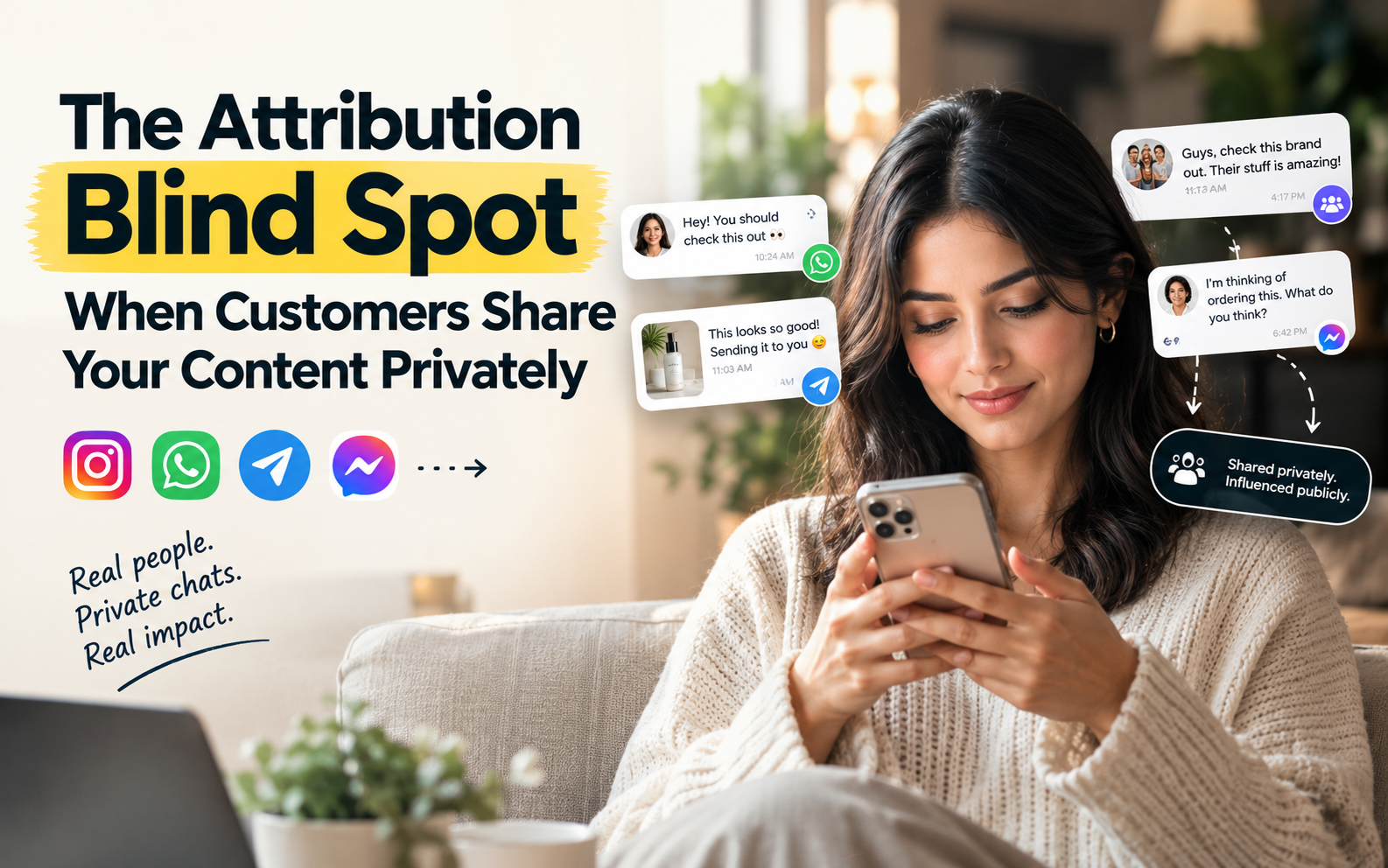
What if they didn't buy immediately after seeing your content? what if a friend sent them the Reel on WhatsApp? Or someone share it in a private Instagram DM? Maybe they discussed your brand in a family group or forwarded your post to a colleague.
You may never see that journey in your analytic.
This is one of the biggest blind spot in modern social media marketing private share can influence conversion without leaving a clear attribution trail.
Not Every Share Is Visible
Public engagement is easy to measure. Like comment public share views and click appear in your dashboard.
Private sharing is different.
People regularly share useful entertaining or relatable content through WhatsApp Instagram DM Messenger and private communities. These interaction can influence buying decision but brand often have limited visibility into what happen after the content is privately shared.
As a result a piece of content may appear to have generated only modest engagement while actually influencing many more people behind the scene.
Why Private Sharing Matters
Think about how people actually make purchasing decision.
Someone might discover a restaurant through Instagram send its Reel to a friend and later visit together.
Someone interested in home interior might send a designer's project to their partner before contacting the designer.
A potential customer might forward a skincare video to a friend and ask Should I try this?
The original brand may only see the final enquiry. The conversation that created the interest happened somewhere else.
That's why social media performance shouldn't always be judged only by visible engagement numbers.
The Problem With Last-Click Thinking
Traditional attribution often focuses on the final measurable action such as clicking an ad visiting a website or submitting a form.
But customer journey are rarely that linear.
A person can see a Reel today receive it from a friend next week search for the brand later and finally contact the business through Google or WhatsApp.
Which channel get the credit?
Usually the last measurable touchpoint.
But that doesn't necessarily mean it created the demand.
This is where brand can underestimate the real value of content designed to be shared.
How Brands Can Reduce the Blind Spot
You can't track every private conversation but you can make the journey easier to understand.
Use UTM links where appropriate create trackable campaign URLs and monitor branded search growth alongside social performance.
More importantly ask customer how they discovered you.
A simple question such as How did you hear about us? can reveal information that platform analytic cannot.
You can also monitor content metric beyond likes. Save share replies profile visit direct enquiries and repeated mention can provide useful signal about whether content is creating genuine interest.
Create Content People Want to Send
The goal shouldn't simply be to create content that people watch.
Create content that makes someone think
I need to send this to someone.
Helpful tip relatable problem before and after transformation educational video useful checklists and strong opinion can all become highly shareable when they solve a real problem or start a conversation.
And sometime the most valuable share is the one you never get to see.
The Bigger Lesson
Social media attribution will never capture the entire customer journey.
People don't behave like tracking pixel. They talk forward recommend discuss and make decision in private.
So instead of asking only how many people engaged with this post? brand should also ask
Did this content give people a reason to talk about us?
Because in a world where more conversation happen privately the content that quietly travel from person to person may be doing far more marketing work than your dashboard can show.